On Technological Determinism
Technological determinism is the belief that technology is the single driving force of history, dictating how human customs, morals, institutions, laws and more, develop and change over time. In a recent blog post by Mechanize [1], the cofounders argue that:
“Whether we like it or not, humanity will develop roughly the same technologies, in roughly the same order, in roughly the same way, regardless of what choices we make now.”
This has become a growing consensus in the Bay: that our future has already been determined by the technology we began to develop decades ago. And so there is a sense of inevitability, even defeatism, that the dominoes have already fallen and the inexorable march of progress has begun its unwavering stride. So our futile efforts at changing it are better spent either accelerating it or insuring ourselves against it.
This is not at all irrational, technology capable of labor substitution has historical precedent. [2] We would be unwise to ignore the lessons from: Engels’ Pause [3], the Gilded Age and the Great Decoupling [4], as well as not be hopeful given the material abundance observed in the centuries after mass industrialization.
But we made many mistakes in the decades of early industrialization, and I strongly believe that many of these can be avoided, mitigated or the extended period of mass poverty, can be shortened - this time around.
In this article, we’ll consider
- The case for technological determinism
- How change as a result of technology, can still be steered with reform
- How the risks of technological advancement can be controlled, and what must be actively worked on to prevent them
The case for technological determinism
Determinism and predestination have strong historical roots, from the Moirai of Greek mythology to Mingyun in Confucianist belief, but economic determinism is a recent phenomenon of thought. It is argued to have first appeared in Marx’s theory of historical materialism. Marx seems to posit that society organizes itself around technology, as it changes the material means of survival:
“The hand-mill gives you society with the feudal lord; the steam-mill society with the industrial capitalist.”
However, Marx predominately focuses on how the distribution of food, water and resources, through systems like wage labor, shape class dynamics. Technology serves as perhaps one of many mechanisms of material change. The case for technological determinism is much more specific.
Underpinning technological determinism are 2 core beliefs:
- Autonomy - technology develops by its own internal logic, driven from outside society.
- Primacy - technological change is the main driver of societal change. Culture and institutions adapt to it.
In Mechanize’s essay, they put forward two arguments to support these claims about technology.
First, they show that important discoveries are typically made by multiple people around the same time. They offer a rolodex of examples showing that history-altering discoveries are made concurrently and independently by many people. Famously, Alexander Graham Bell filed a patent application for the telephone on the same day Elisha Gray filed a patent caveat, separated by only hours. [6]
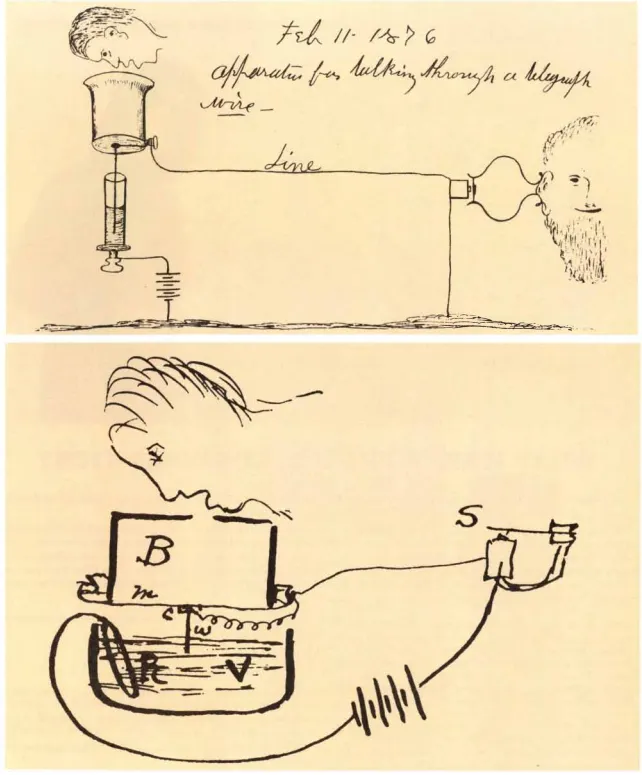
This is admittedly not an anomaly in history. Many important inventions such as jet engines, the telegraph, and the Hall-Héroult process of smelting aluminum were invented by multiple people around similar times. [7] [1]
How Often Do Inventions Have Multiple Inventors?
This would seem to insinuate that as important technology becomes possible to invent, humanity invents it.
The second argument points out that isolated societies tend to converge on the same technologies. The Spanish, the Mesopotamians, the Chinese and more, all seem to develop the wheel, different versions of paper and writing, the craft of metallurgy and not only this, but they also all converge on similar ways of organizing society: the bureaucratic state, taxation and basic accounting.
So, if all important technologies are discovered as soon as they become possible by multiple, independent inventors, and independent societies throughout history seem to converge on the same technologies and thus, the same institutions, it really does seem that technology is the primal driver of historical progress.
Technology does not determine societal change
This narrative of determinism must have you believe that technology is an unyielding process that causes all societies to converge on some single social equilibrium. Yet history is replete with counterexamples.
Industrialized societies in the East and West were starkly different - predominately due to the political institutions that mediated the technological change. Even if we concede our technological trajectory is not under our control, it is unlikely to be true that society’s trajectory is as well.
While the Soviet Union was able to develop thermonuclear weapons and launch Sputnik into space, it struggled to ship food across its own borders, as the life of the average citizen deteriorated. Anti-chastnik policies in the 1930s to 50s, destroyed commercial networks and removed merchant middlemen, making it prohibitively difficult to transport produce from agrarian nations to urban masses inland. [8] Central planning only exacerbated allocation difficulties. Ironically, the Soviet Union often had grown more food than it needed, but it possessed little capacity to distribute it - creating what came to be known as a ‘permanent shortage economy’.

This was not true of early American industrialization, which expanded the purchasing power of substantial sections of the wage-earning population. [9] Canals and railroads connected producers with distant markets, [10] as mechanization lowered costs for everyday goods. While urban life did initially suffer from disease, abject poverty and extreme inequality, it was not characterized by the permanent shortages and persistent famine that defined most of Soviet life. It is clear that even simple, domestic trade policies can have an enduring effect on the trajectory of a society.
However, even the inequality seen as an inevitable byproduct of industrial capitalism is not unavoidable. We can consider post-war industrial Sweden and America. Both nations’ wage distributions sharply diverged in the 1970s, predominately due to Swedish wage-setting arrangements and active labor market policies. Strong unions collectively bargained for a policy of wage solidarity, narrowing wage differences across firms and industries. [11] [12] Between 1968 and 1984, inequality in male hourly wages shrunk substantially, while American wage inequality only widened after 1970. [11] [13] While comparable reforms were made during the Progressive Era and with success, Reaganism reversed many landmark anti-trust and progressive taxation policies, causing spiralling wage deflation and income disparities in the US. Many of these changes - corporate deregulation and the dismantling of labor unions - paved the way for the corporate consolidation present in America today. [14] The same cannot be observed for other industrial, capitalist nations such as Singapore and Australia which enforced strict pro-competition mandates, [15] [16] and in Australia, where strong labor coordination persisted.
AI reform can change our trajectory
If technological determinism were true, you would not observe such disparities between nations, that differ not in technological development, but economic policy. While every country has its nuances of geography, culture and history - and so differences are expected - it seems hard to believe that such wide differences in inequality, the availability of goods and material conditions can just be chalked up to the 'rippling effect' of technology.
- Economic policy and lobbying may be more important than ever. If the contention is that technology will force our hand in policy, this seems to be anything but true. We see how active labor policy and market regulation has led to societies that do not resemble each other.
- Technology does not motivate societal progress, only societal change. Whether it is progressive taxation, central planning, or trade networks that expand access to manufactured goods - the distribution of intelligence, will influence how the gains of progress are shared.
The order of discovery can still be rearranged
Even if our broad technological path is determined by precedent inventions, changing the order at which technologies are developed, or even which technologies we develop alongside each other, could be existentially important. Permissive Action Links (PALs) on nuclear weapons, are a compelling example that state-sponsored development can mediate our path.
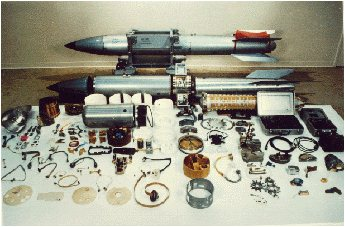

PALs were developed as a counterpart technology to nuclear weapons, for controlling unauthorized access and use. Developed by Sandia in 1960, by 1962 Kennedy had mandated their installation on all US nuclear weapons dispersed to NATO commands. Designed as coded locking devices, they regulated whether a nuclear weapon could be used without authorization. [19] Separate safeguards, including environmental sensing devices that check conditions match a predetermined launch sequence, and accident-safety switches, were also designed to prevent unintentional detonation. In 1961, a B-52 bomber carrying two Mark 39 hydrogen bombs broke apart over Goldsboro, North Carolina. One bomb progressed through several stages of its arming sequence, but one switch remaining in the safe position preventing catastrophe. The Palomares incident in 1966 and the Titan II incident in 1980 are further examples of the effectiveness of command and control (C2) technologies. Preventative efforts to contain capabilities are certainly rare in history, but PALs and C2 technologies are not alone. Emergency core cooling mechanisms were developed alongside nuclear reactors as were biological safety cabinets for laboratory research.
AI safety should pursue command and control
Today we face a similar threat to nuclear weapons, as AI can now equip individuals and groups with unprecedented cyber and bio capabilities. It has become clear that models possess the ability to manipulate human judgments [20], conduct scientific research [21], and support large-scale cyberattacks [22], and further, removing refusal behavior can be done with relatively few modifications to the model. [23] While AI safety is not underfunded in absolute terms, it certainly is, relative to the capital dedicated to push frontier capabilities. Safety at most frontier labs are ad-addendum to the core training process due to a lack of financial incentive to push alignment as far as capabilities [24]. Highly capable Chinese open weight models are released on the open internet. Multi-agent behavior shows swarms of models can pursue complex tasks via unaligned means, through cooperation. [25] [26]
As with nuclear weapons, attempts at cooperative deceleration - such as nuclear non-proliferation, have scarcely prevented actors from covertly developing capabilities. Pursuing strong command and control mechanisms however, as with PALs, seem to be one of the few ways that have mitigated the risk of potentially catastrophic technologies. PALs have ensured that nuclear weapons cannot be detonated by rogue actors and have prevented capabilities from being accidentally activated and used discreetly. Notably, PALs and C2 technologies were not simply a logical continuation off the back of prior technology, they were intentionally funded and led by the government. Just as the future of AI will likely also be steered by the willpower of researchers and policymakers, to cooperate on alignment research and contain capabilities.
Conclusion
Whether we believe the future is already determined or malleable can feel like a trivial argument to be had, that is just of historical or intellectual interest. But I would argue this is one of the most important perspectives of our time.
If we believe that humanity’s trajectory is entirely out of our control, we might accelerate headlong towards highly capable models. Yet AI does not need to progress much further to create suffering at an inordinate scale - suffering that could otherwise be mitigable.
On the other hand, the belief that technological paths are entirely under our control, and capability deceleration is a worthy pursuit, are likely also flawed. There are overwhelming market and geopolitical forces at play for full automation and super-intelligence to exist.
We need to be selective about the methods we choose to affect the future. Hence, having a clear-minded perspective on which parameters could still change our trajectory, is existentially important. It would change the initiatives we choose to fund, the policies we vote for, and the problems we choose to pursue as individuals.
References
[1] Barnett, Matthew, Tamay Besiroglu, and Ege Erdil. (2025, October 6). The future of AI is already written. Mechanize.
[2] Autor, David H., Lawrence F. Katz, and Melissa S. Kearney. (2006). The Polarization of the U.S. Labor Market. American Economic Review, 96(2), 189–194.
[3] Allen, Robert C. (2009). Engels’ pause: Technical change, capital accumulation, and inequality in the British industrial revolution. Explorations in Economic History, 46(4), 418–435.
[4] Stansbury, Anna M., and Lawrence H. Summers. (2017). Productivity and Pay: Is the Link Broken?. NBER Working Paper 24165.
[5] Marx, Karl. (1847). The Poverty of Philosophy, Chapter II, §1, Second Observation. Marxists Internet Archive.
[6] Hounshell, David A. (1981). Two Paths to the Telephone. Scientific American.
[7] Potter, Brian. (2025, June 5). How Common Is Multiple Invention?. Construction Physics.
[8] Lewin, Moshe. (1985). The Making of the Soviet System: Essays in the Social History of Interwar Russia. Pantheon Books.
[9] Sokoloff, Kenneth L., and Georgia C. Villaflor. (1991). The Market for Manufacturing Workers During Early Industrialization: The American Northeast, 1820 to 1860. NBER Historical Working Paper 28.
[10] Slaughter, Matthew J. (1995). The Antebellum Transportation Revolution and Factor-Price Convergence. NBER Working Paper 5303.
[11] Edin, Per-Anders, and Robert Topel. (1997). Wage Policy and Restructuring: The Swedish Labor Market since 1960. In The Welfare State in Transition: Reforming the Swedish Model, pp. 155–202. University of Chicago Press.
[12] Davis, Steven J., and Magnus Henrekson. (2000). Wage-Setting Institutions as Industrial Policy. NBER Working Paper 7502; published in Labour Economics, 12(3), 345–377 (2005).
[13] Goldin, Claudia, and Robert A. Margo. (1991). The Great Compression: The Wage Structure in the United States at Mid-Century. NBER Working Paper 3817; published in The Quarterly Journal of Economics, 107(1), 1–34 (1992).
[14] DiNardo, John, Nicole M. Fortin, and Thomas Lemieux. (1995). Labor Market Institutions and the Distribution of Wages, 1973–1992: A Semiparametric Approach. NBER Working Paper 5093; published in Econometrica, 64(5), 1001–1044 (1996).
[15] Competition and Consumer Commission of Singapore. Competition Act and Guidelines. Official guidance on the Competition Act 2004.
[16] Productivity Commission. (2005). Review of National Competition Policy Arrangements. Australian Government inquiry report.
[17] O’Laughlin, Doug. (2026, April 15). Engels’ Pause and the Permanent Underclass. Fabricated Knowledge.
[18] Acemoglu, Daron, and Pascual Restrepo. (2019). Automation and New Tasks: How Technology Displaces and Reinstates Labor. NBER Working Paper 25684.
[19] Sandia National Laboratories. 1960s: Spinning off new capabilities, new directions. See the entry for June 6, 1962, on PAL development in 1960 and Kennedy’s NSAM 160.
[20] Salvi, Francesco, Manoel Horta Ribeiro, Riccardo Gallotti, and Robert West. (2025). On the conversational persuasiveness of GPT-4. Nature Human Behaviour, 9, 1645–1653. Use the updated article, including the September 3, 2026 author correction.
[21] Gottweis, Juraj, et al. (2025). Towards an AI co-scientist. arXiv:2502.18864.
[22] Anthropic. (2025, November 13). Disrupting the first reported AI-orchestrated cyber espionage campaign. Primary incident report; its findings and attribution are Anthropic’s assessment.
[23] Arditi, Andy, et al. (2024). Refusal in Language Models Is Mediated by a Single Direction. NeurIPS 2024; arXiv:2406.11717.
[24] Ha, Anthony. (2026, February 14). Is safety ‘dead’ at xAI?. TechCrunch.
[25] Von Arx, Sydney, Cormac Slade Byrd, Spencer Kitts, and Thomas Larsen. (2026, September 4). Discovery of a new OpenAI agent message board. Collusion.wiki.
[26] Greenblatt, Ryan, Ajeya Cotra, and Hjalmar Wijk. (2026, August 26). Brief independent investigation of agents’ behavior, reasoning and collaboration in the OpenAI / Hugging Face hacking incident. METR and Redwood Research.